
Views: 0 Author: Site Editor Publish Time: 2026-02-07 Origin: Site
Designing a bathroom is a balancing act. You want a space that feels like a personal sanctuary—stylish, calming, and beautiful—but you also need it to survive the morning rush. Between toothpaste spills, makeup smudges, and high humidity, your bathroom surfaces take a beating. This is why choosing the right material for your vanity is one of the most critical decisions you will make during a remodel.
While granite and quartz have dominated the conversation for years, a different contender has quietly become the favorite of modern designers and practical homeowners alike: the solid surface bathroom vanity top.
If you are currently weighing your options, you might be wondering if this material lives up to the hype. Is it durable? Is it easy to clean? Does it look plastic, or can it mimic the elegance of stone? This guide explores everything you need to know about solid surface materials, helping you decide if this versatile option is the missing piece in your bathroom design puzzle.
Before we look at the benefits, it helps to understand what you are actually buying. A solid surface bathroom vanity top is a man-made material composed of mineral dust (mostly marble dust/bauxite), mixed with a variety of plastic resins and pigments.
The term "solid surface" refers to the consistency of the material. Unlike laminate, which is a thin layer glued to a wood base, or stone that might have natural fissures, solid surface is consistent all the way through. If you were to cut a solid surface slab in half, the color and pattern would look exactly the same in the middle as it does on the outside.
This homogeneity is its superpower. Because the color goes all the way through, the material is renewable and repairable in a way that natural stone is not. It was originally created to offer a non-porous alternative to stone, solving the hygiene issues that come with porous materials like marble or granite.
Homeowners are shifting away from high-maintenance materials. Who wants to spend their Saturday morning sealing granite? Solid surface vanity tops for bathrooms offer a blend of practicality and aesthetic flexibility that is hard to beat.
Here is a breakdown of the primary characteristics that make this material stand out:
Feature | Description | Benefit |
|---|---|---|
Non-Porous | The material has no microscopic holes or pores. | It resists stains, mold, and bacteria growth, making it incredibly hygienic. |
Seamless Joints | Pieces can be fused together chemically. | You can create long runs or L-shapes without visible seams where dirt can hide. |
Thermoformable | It can be heated and bent into curves. | Allows for unique, curved designs and custom shapes that stone cannot achieve. |
Repairable | The surface is homogenous. | Scratches and burns can often be sanded out, restoring the surface to new. |
Beyond the technical specs, the visual appeal is a major draw. Because it is manufactured, consistency is guaranteed. You don't have to worry about finding a slab of granite that matches the sample you saw in the showroom; with solid surface, what you see is what you get.
This is the most common question homeowners ask. You want the luxury look, but you need to know if you are sacrificing quality by skipping the stone.
Natural stone (like granite and marble) is undeniably beautiful, offering unique veining that cannot be perfectly replicated. However, stone is porous. If you spill hair dye or red wine on unsealed marble, that stain might be permanent. Stone also requires regular sealing to maintain its resistance to bacteria and fluids.
Quartz is an engineered stone that is non-porous, similar to solid surface. However, quartz can be prone to chipping at the edges and usually shows visible seams.
Here is a quick comparison to help you visualize the differences:
Comparison Point | Solid Surface | Granite (Natural Stone) | Quartz (Engineered Stone) |
|---|---|---|---|
Maintenance | Low (Soap & Water) | High (Requires Sealing) | Low (Soap & Water) |
Stain Resistance | Excellent | Good (If Sealed) | Excellent |
Heat Resistance | Moderate (Can scorch) | High | High |
Seamless Look | Yes (Invisible seams) | No (Visible seams) | No (Visible seams) |
DIY Repair | Yes (Sandable) | No (Professional help needed) | No (Professional help needed) |
Cold to Touch | No (Warmer feel) | Yes | Yes |
If you prioritize a warm, seamless look and the ability to fix accidents yourself, a solid surface top often wins out over the harder, colder stone options.
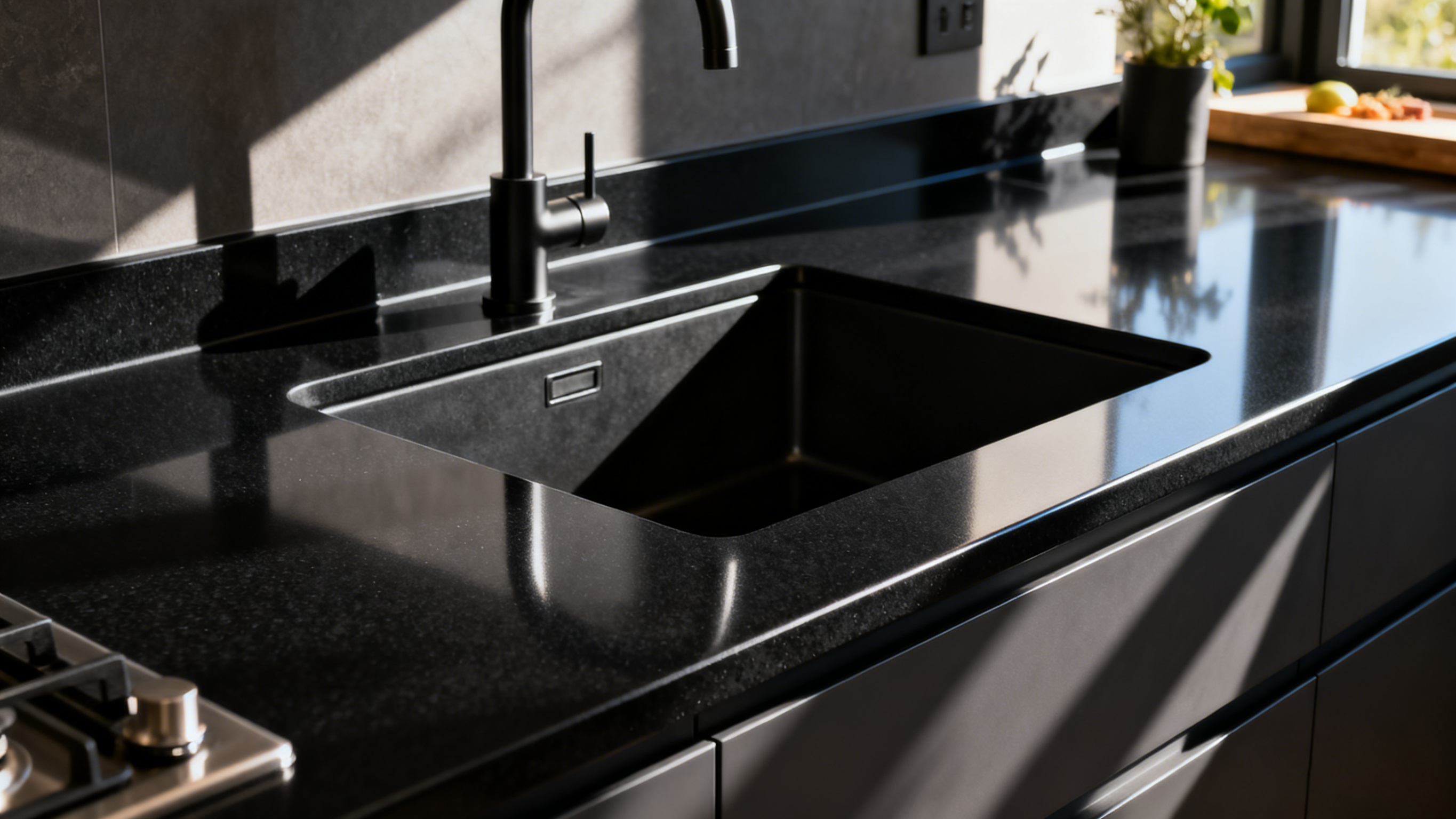
One of the most stunning features available with this material is the integrated sink. Because solid surface can be bonded seamlessly, you can fuse the sink bowl directly to the countertop.
A solid surface bathroom vanity sink creates a fluid, continuous line from the counter down into the basin. There is no "lip" or rim where the sink sits on top of or under the counter.
Why does this matter?
Hygiene: Without a sink rim, there is no caulking to get moldy and no crevice for toothpaste gunk to accumulate.
Aesthetics: It creates a minimalist, architectural look that is incredibly modern.
Cleaning: You can wipe water and debris straight into the sink without it getting caught on a lip.
Manufacturers offer these sinks in various shapes—rectangular, oval, or even custom ramp styles. If you are looking for specific design ideas or want to see how these integrated sinks look in a finished space, you can check out various examples of bathroom furniture to find a style that suits your renovation.
Bathrooms often come in odd shapes and sizes, especially in older homes. A standard 30-inch vanity from a big-box store might not fit your specific alcove.
This is where solid surface shines. Because it can be cut and sanded much like wood, it is highly customizable. Fabricators can cut it to the exact inch you need. Furthermore, because it is "thermoformable" (meaning it becomes flexible when heated), designers can create curved fronts, rounded backsplashes, or unique organic shapes that would be impossible or astronomically expensive to carve out of stone.
If you have a tight corner or want a vanity top that curves around a wall, solid surface is often the only material that can handle the job gracefully.
Despite its elegant appearance, solid surface is a workhorse. It is durable and resistant to the daily wear and tear of a busy household. However, "durable" does not mean "indestructible."
Cleaning Guidelines:
Day-to-day cleaning is effortless. Warm soapy water or an ammonia-based cleaner (like most glass cleaners) is usually all you need. Because the surface is non-porous, stains stay on the surface rather than soaking in.
Handling Damage:
While the material is tough, it is softer than granite. If you drag a heavy ceramic pot across it, it might scratch. If you leave a curling iron sitting directly on the surface, it could scorch.
The good news is that these damages are rarely permanent.
Minor Scratches: Can be buffed out using a mild abrasive cleaner and a scrubbing pad.
Deep Scratches: Can be sanded down with fine-grit sandpaper.
Cracks: In severe cases, a professional can cut out the damaged section and glue in a matching piece. Once sanded, the repair is virtually invisible.
Budget is always a factor in renovation. Generally, solid surface sits in the mid-tier price range. It is typically more expensive than laminate or tile but often more affordable than premium granite, marble, or high-end quartz.
However, the "cost" isn't just the purchase price; it is the lifecycle cost.
Cost Factor | Solid Surface | Laminate | Natural Stone |
|---|---|---|---|
Initial Price | Moderate | Low | High |
Installation | Professional recommended | DIY friendly | Professional required |
Lifespan | 20+ Years | 10-15 Years | Lifetime (if maintained) |
Repair Costs | Low (often DIY) | High (Cannot repair) | High (Professional only) |
When you factor in that you won't need to buy sealers every year and that you can sand out a scratch instead of replacing the whole counter, the long-term value of solid surface is exceptionally high.
The choice of vanity top sets the tone for your entire bathroom. While natural stone has its place, the solid surface bathroom vanity top offers a unique combination of seamless beauty, hygiene, and repairability that fits perfectly with modern lifestyles.
Whether you are looking for a stark white minimalist solid surface bathroom vanity sink or a custom gray countertop that mimics concrete without the maintenance, this material delivers. It invites you to touch it, use it, and live with it, without the constant fear of staining or chipping.
If you value a clean look and a material that is forgiving of everyday life's little accidents, solid surface might just be the upgrade your home deserves.


